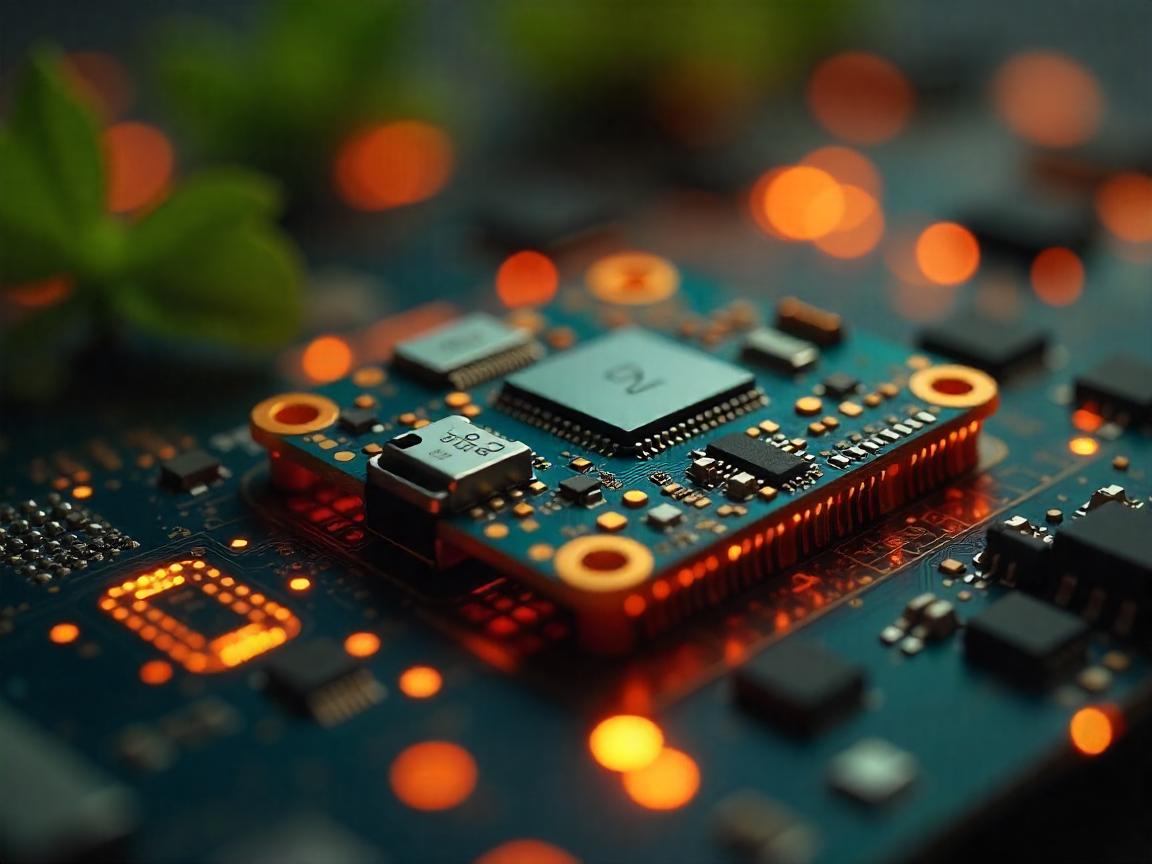
Real-Time Programming of IoT for Lightweight Devices
Imagine a forest sensor alerting before cloud servers waiting first. That’s why that’s the force of edge computing with MicroPython and CircuitPython – that’s quick, suited and unbelievably effective. As reported by Gartner (2024), more than 75% of the data produced by enterprises will be managed near the edge by 2025; hence, the need for real-time computing on microcontrollers among microcontroller manufacturers has never demanded so much. These lightweight Python flavors are shedding the light on the ESP32 and Raspberry Pie Pico types of implanted systems, allowing developers to create edge-ready code with one of the globe’s most widespread languages.
Why MicroPython and CircuitPython are needed for Edge Computing?
Closer to home, cloud-based IoT systems in traditional applications are blockers – latency, privacy, and bandwidth charges. By moving computation to the edge, devices are able to make instant decisions without the need depending on remote servers.
Edge computing with MicroPython and CircuitPython makes exactly that possible. These are versions of Python fit for constrained environments with simplicity of syntax with powerful control. 2024 metrics of Adafruit itself demonstrate a 150% increase in industrials sensor applications of CircuitPython usage. When I deployed a monitoring system for air quality in a rural indian school we used CircuitPython on Adafruit Feather M4 easy to deploy update maintain locally without wi-fi.
When to use MicroPython and CircuitPython in edge projects.
Although both are smart, you have a choice between them if you need them. MicroPython gives the user more control and is preferable to advanced developers and CircuitPython is superb for fast prototype and education.
MicroPython
- Works very well with ESP32, STM32, and low level logic.
- Provides enhanced memory management and real time tweaks.
CircuitPython
- For nave users and plug and play use
- Includes Windows USB support, sensor libraries for Adafruit.
In our community-led irrigation project in Gujarat, CircuitPython drove local decision making according to soil moisture levels with no wi-fi and no cloud dashboard.
Practical Applications of the Real-World Edge Computing in Python
The use of edge computing with MicroPython and CircuitPython is having real impact:
- A textile factory in Ahmedabad used ESP32 and MicroPython to report defective vibration states in machines to technicians in advance of breakdowns.
- Nebraska, a 2023 University study demonstrated that edge-driven smart irrigation systems (based on CircuitPython), reduce the waste of water by 27%.
- In a personal build, I made a solar-powered motion sensor from MicroPython on an ESP8266. It stored all movement data locally and broadcast an alert only if a threshold was exceeded.
Such cases demonstrate that local intelligence lowers both the cost of infrastructure and response time.
Technological challenges of the ePython at the edge.
Edge computing using MicroPython or CircuitPython takes its toll. Memory constraints are real. You can’t load bulky libraries and careful balancing of consumption even for battery-based systems is required.
But it’s not a dealbreaker. You learn to optimize. Use generators, sleep modes, and minimal loops for that matter. In my edge deployment at a health monitoring kiosk, a reduction in print statements alone increased processing from 30%.
Whilst coding in python, you begin to think like a systems engineer.
Why Edge Computing with Python is the Future.
The fact that edge computing with MicroPython and CircuitPython has become truly exciting is accessibility. No other language provides such a combination of readability, power, and real-time ability on microcontrollers. And with Python still ruling in AI, taking smart algorithms and putting them onto the edge hardware is now a viable one.
So here’s my challenge: pick up that dusty ESP32 board, load up MicroPython and have something react locally – no cloud needed. Because, when you have real-time autonomy at the edge, you’ll know that this isn’t just a trend. It’s the future of IoT.